



History of Silver

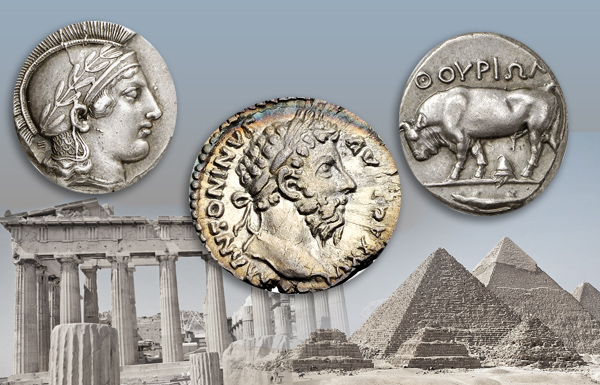
Humans have been fascinated with Silver since recorded history began. In ancient Greece, Silver was associated with Isis, the goddess of motherhood and fertility. In the west, several pre-Columbian tribes buried their dignitaries in Silver to usher them into the next world. Silver appears as a symbol of strength and beauty in everything from Roman mythology to the ancient Hebrew Scriptures. Like Gold, Silver was first used in ceremonial pieces and jewelry. Starting in 700 BC, records show that a merchant from Mesopotamia - now modern day Iraq - traveled over a treacherous mountain path to trade his textiles for Gold and Silver.
Unlike Gold, Silver is often found in large deposits. Mining Silver has been a lucrative enterprise for thousands of years, dating back as far as 500 BC. From 500 to 100 BC, historians say there were 350 mines producing 1,000 "talents" of Silver a year. In today’s measurements, that would be equal to fifty-seven pounds each year, from each mine. And that was just in the known world. Findings show that many tribes in the Americas yearned for Silver as well. In the 16th century, massive deposits of Silver were discovered in Mexico, Bolivia and Peru. These abundant mines made the New World the largest Silver-producing area, fueling the rush for Europeans to explore and exploit this potential wealth.
By the mid-19th century a large Silver deposit was discovered in Nevada, called the Comstock Lode. By then, modern processes were used to extract more Silver from the ore. The Comstock Silver Lode resulted in the United States becoming the world’s largest Silver producer until the 20th century, when it was surpassed by Mexico and Peru.
Silver coins were used almost in tandem with Gold and share a similar history. The Greeks and Romans formed Silver into the first coins used as everyday "hard" currency that was readily accepted throughout their vast empires. Since then, Silver coins have been used by practically every country on the face of the earth at one time or another. In 1792, the United States government based its monetary system on the Silver Dollar. But in 1965, the value of Silver became too valuable to be used in circulating coinage – making the limited number of Silver coins remaining even more costly. While some countries still mint Silver coins, you can also purchase Silver coins and bars from private mints. Coins and bullion bars comprise only a fraction of Silver usage today as 95% of all Silver is used in jewelry, photographic applications, and a variety of industrial uses. Silver demand is high, and with no above ground government stockpiles of refined Silver to meet this demand the value of Silver will likely rise.
Millions of collectors, and a rising number of investment professionals, are attracted to Silver - the most affordable of all the precious metals. They see Silver’s rising global industrial demand, skyrocketing budget deficits, and inflation pushing Silver higher. To learn more about adding Silver coins and bars to your portfolio, contact our highly respected and experienced representatives at Mint State Gold. We can help you acquire investment quality Silver coins that will protect and potentially grow your wealth far beyond other investments.
-
 Trump Calls Cancels Iran Strike And Metals Rally By
June 11 2026
-

-
 Gold, Silver Fall As CPI Keeps Fed Pressure On By
June 11 2026
-
 Iran War And CPI Report Drive Gold/Silver Lower By
June 10 2026
-
 Iran Shoots Down A Helicopter And Metals Drop By
June 9 2026