



Can Gold Push Through USD 3,000 And Beyond?

(Feburary 14, 2025 - Mike O'Sullivan, Forbes)
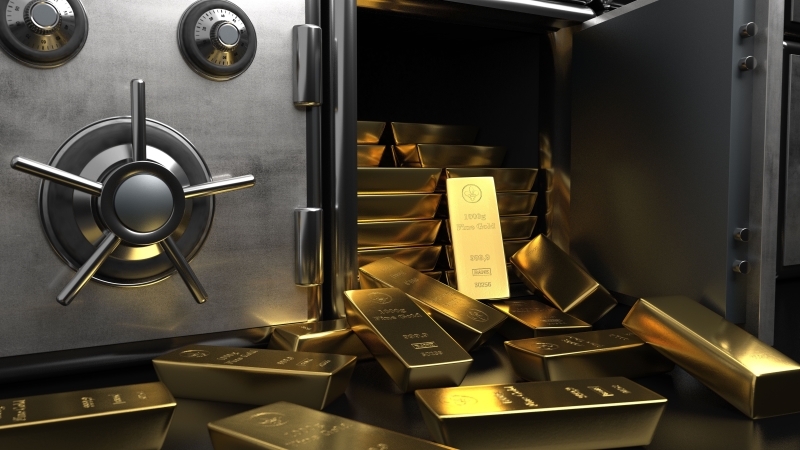
The number 13 tram in Zurich winds its way through the center of the city before turning and pushing uphill to the Uetliberg. The inhabitants of the tram are typically older people and bank employees, but occasionally you might come across a few excited, wealthy individuals journeying to look at their gold in the Credit Suisse (now UBS of course) building at Uetlihof. The entrance to the building is on the 8th floor, betraying a deep underground complex where it is said, the bank stores gold bars, and sometimes invites the owners of the gold to view their stash.
Those investors who own gold will be very happy. It has returned 40% in the past two years and is now closing in on the USD 3,000 level, despite a stronger dollar and high interest rates.
There are few assets like gold. The vast majority of investors do not hold it, nor have they a sense of how its price behaves. But there are others who are passionate about gold and hold large quantities of it in their portfolios. Finance theory suggests investors should hold 2% of gold in a portfolio, but my experience is that in practice, it is either 0% or greater than 10%. To that end gold is a ‘Marmite’ asset class, because like the Marmite spread, you either love it or hate it.
It used to be that a difficult interview question for graduates was to ask them what the drivers of the gold price are. Now that question is more likely to focus on the drivers of bitcoin. Bitcoin’s architects likely wanted it to behave like digital gold, but instead it seems to trade like digital Nasdaq futures on steroids.
The gold price has perhaps three drivers – the role of gold as a monetary variable, the effects of commodity or physical demand and its role as a store of value in times of crisis.
Typically gold as a ‘rival’ for paper money is driven by changes in the monetary environment – namely the value of the dollar and medium-term interest rates. For example, from the early 2000’s onwards the price of gold has moved inversely with the inflation adjusted yield on ten-year US bonds (rising bond yields tend to be bad for gold). But, in 2022, something funny happened – inflation adjusted bond yields rose, but gold kept rising and has not stopped since. Indeed, I now see more and more financial headlines that ‘gold is breaking out’, which is likely a sign that the ‘top’ is not far away.
The strength of the gold price is curious because in many quarters demand for gold has been muted – according to the Banque de France, demand for gold is made up of jewelry (49%), central banks (23%), financial investors (21%) and the electronics sector (7%).
-
 Gold & Silver Buyers Are Back By
September 17 2026
-
 Gold & Silver Start Higher But Drop After ¼% Increase In Interest Rates By
September 17 2026
-
 Gold & Silver Awaits Tomorrow’s Fed Decision By
September 15 2026
-
 GOLD & SILVER SELL-OFF ON HIGHER TREASURY YIELDS By
September 15 2026
-
 Gold Is The 'North Star' In A World Drowning In Debt By
September 15 2026