



Gold Set For New High This Year On Ukraine Crisis

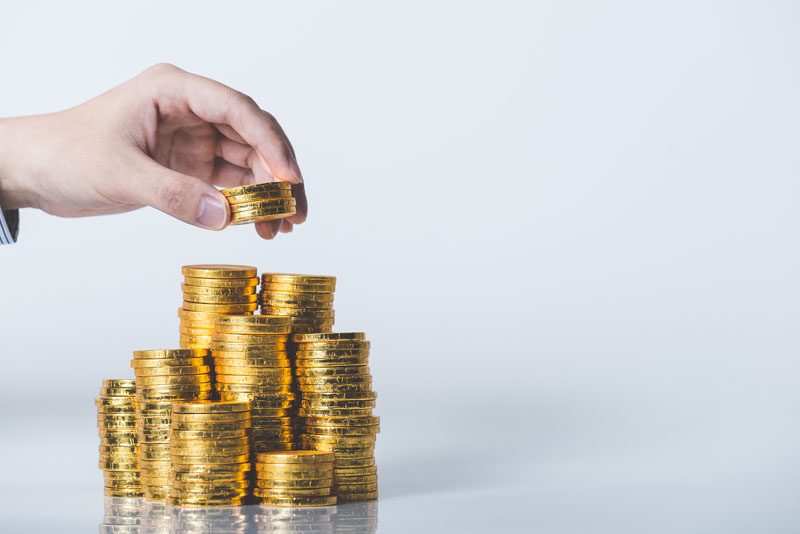
(March 18th, 2022 - Rurika Imahashi)
Inflation, pandemic worries also send investors to seek safety in bars and coins
State Street Global Advisors' gold expert George Milling-Stanley sees the price of gold reaching a new high this year.
TOKYO -- Gold prices are set to spiral to a new high this year as investors seek safe haven during an uncertain time worsened by Russia's invasion of Ukraine, according to U.S.-based State Street Global Advisors.
State Street Vice President and Chief Gold Strategist George Milling-Stanley said in a recent written interview that continued high inflation along with an increase in geopolitical tensions set the stage for gold's climb this year. Gold is often used by investors as a hedge against inflation.
The benchmark gold price in New York rose above $2,078 per ounce at one time last week, hitting the highest level since August 2020, as tensions between Ukraine and Russia intensified and Western countries mull stricter sanctions to slap on Russia.
"I would expect the gains to continue until some sort of settlement of the Ukraine issue is reached, which right now seems a long way distant," Milling-Stanley wrote in reply to questions.
"I would not bet against rising gold prices in this situation," he added, as the invasion added fuel to an already uncertain political and economic environment. State Street Corp. has $3.9 trillion assets under management and manages SPDR Gold Shares, the largest physically backed gold ETF in the world.
Investors had also been closely watching the U.S. Federal Reserve, which on Wednesday raised interest rates for the first time since 2018 by 25 basis points. In a normal market, interest rate hikes draw investors to bonds and cash, and away from nonyielding assets like gold.
However, Milling-Stanley said, before the Fed action, "Fed Chairman Jerome Powell has made it clear that the Fed will raise rates in a cautious manner in order to avoid triggering a U.S. recession, and that cautious stance has only increased in the wake of the Ukraine invasion."
"History suggests that the gold price frequently goes up simultaneously with interest rate increases," said Milling-Stanley, adding that this is exactly what happened when the Fed raised rates nine times between December 2015 and December 2018, with gold rising 17%, and when the Fed raised rates 17 times between June 2004 and June 2006, with gold going up 57%.
"Given the lessons of history, combined with the current environment of significant levels of uncertainty both economically and geopolitically, I would expect the gold price to continue to rise," he added.
The current environment is so uncertain, given also the ongoing COVID-19 pandemic, that investors have continued to hoard gold. "The purchases have come from the whole spectrum of investors, from individuals to large institutions," Milling-Stanley said.
According to the World Gold Council, demand for bars and coins hit 1,124 tons in 2021, the highest in almost a decade, with the U.S. and Germany seeing record investment. Milling-Stanley expects this trend to continue.
"The strong gains in bar and coin demand around the world last year is increasing fear of rising inflation among individual investors," said Milling-Stanley. "There is no question that gold's perceived role as offering some protection against high inflation is a strong motivating factor for investors, especially in Europe."
Inflows into gold-backed exchange-traded funds (ETFs) are rising globally. According to the World Gold Council, global gold ETFs drew net inflows of 35.3 tons in February.
State Street is recommending investors allocate "somewhere between 2% and 20%" of their assets to gold, depending on individual needs in terms of liquidity and willingness to accept risks.
There has been speculation in the market as to whether Russia will sell any of its gold holdings to defend its currency and economy in the face of tight sanctions. The World Gold Council said Russia's central bank had 2,298 tons of gold as of January, the fifth-biggest hoard, after the holdings of the U.S., Germany, Italy and France. Russia more than doubled its gold holdings over the past decade to 21% of its total reserves, according to the World Gold Council.
With the ruble tumbling 80% from the start of the year to around 136 against the dollar, Russia barred from the SWIFT international payment network and the U.S. ban on Russian oil imports, some have wondered if Moscow will sell gold to shore up its finances.
"It is difficult to see a scenario in which the country would suddenly turn round and start selling gold for foreign currencies, which already account for 80% of the country's reserves," according to Milling-Stanley, who added that any attempt by Russia to sell gold would meet hurdles.
"Some 95% of Russia's gold reserves are believed to be held in Moscow, and any sales from these stocks would involve transport to an international financial center," Milling-Stanley said. "And all this begs the question of who might act as a counterparty for any potential Russian gold sales, given current international sanctions."
-
 Gold & Silver Buyers Are Back By
September 17 2026
-
 Gold & Silver Start Higher But Drop After ¼% Increase In Interest Rates By
September 17 2026
-
 Gold & Silver Awaits Tomorrow’s Fed Decision By
September 15 2026
-
 GOLD & SILVER SELL-OFF ON HIGHER TREASURY YIELDS By
September 15 2026
-
 Gold Is The 'North Star' In A World Drowning In Debt By
September 15 2026