



It Might Be Good To Hold Some Gold After U.S. Debt Downgrade

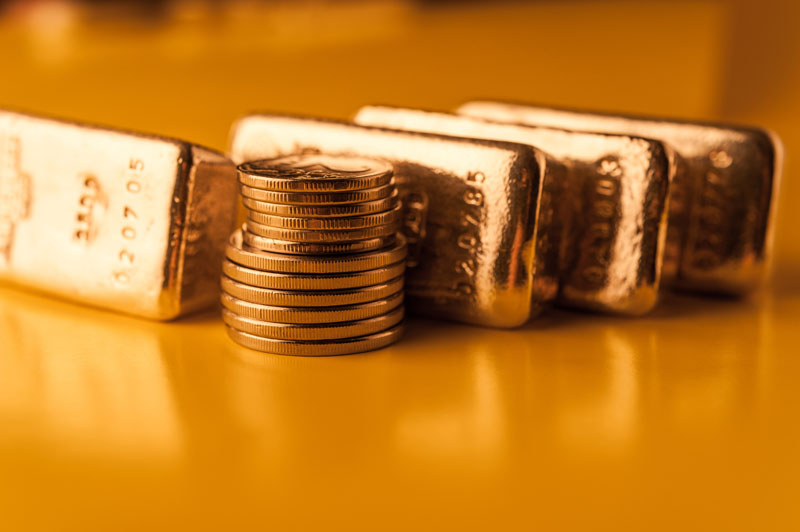
(August 4,2023- Neils Christensen)
Financial markets were hit with surprise this week when late Tuesday, Fitch downgraded the U.S. Long-Term Foreign-Currency Issuer Default Rating to 'AA+' from 'AAA.'
In its announcement, Fitch said it sees the U.S. general government deficit rising to 6.3% of GDP in 2023, up from 3.7% in 2022. The deficit is expected to grow by 6.6% and 6.9% of GDP in 2024 and 2025, respectively.
The last time U.S. sovereign debt was downgraded was in 2011, and it sparked a rally that drove gold prices above $1,900 an ounce, which was then an all-time high. Fast forward 12 years later and gold prices can barely bounce off support as they remain trapped in no-man’s land.
It’s not surprising that gold has not seen a surge in safe-haven demand as Fitch’s downgrade comes at a much different time; the fear in the marketplace is not as palpable as previously. In 2011 the global economy was still recovering from the 2008 Great Financial Crisis, growth was anemic, the labor market was weak and the Federal Reserve was pumping billions into the economy.
So far in 2023, after nearly three years of pandemic-related turmoil, growth has been robust, with the economy near full employment even as the Federal Reserve has been aggressively raising interest rates and reducing money supply to bring inflation down to its 2% target.
However, just because gold hasn’t reacted, doesn’t mean it won’t. In a recent interview with Kitco News, John LaForge, head of real asset strategy for Wells Fargo Investment Institute, said that he expects gold prices to rally through year-end as more investors focus on U.S. debt.
"If we do get this jump back up in money supply again, and investors start to worry that we are printing too many of these little pieces of paper, we will finally see that long-term run in gold and silver," Laforge said. “I would expect that rally to last for three years."
Michele Schneider, director of trading education and research at MarketGauge, said that Fitch’s downgrade is just another step in gold’s long-term path higher.
“At $30 trillion, it's hard to imagine that is sustainable without some fallout. Debt to GDP with high interest rates is a huge stress on the economy," said Schneider. "Once things stabilize, then gold can kick back in as a safe haven."
Although gold is not seeing any new bullish momentum, the market is still in pretty good shape. This week the World Gold Council noted that healthy physical demand supported the highest average quarterly gold price during the second quarter.
Demand in the second quarter was driven by the physical Over-the-counter market. According to the report, global gold demand excluding OTC dropped to 921 tonnes, down 2% from last year. However, when including limited data from OTC markets, global gold demand increased to 1,255 tonnes, up 7% from the second quarter of 2022.
We can see that there is plenty of interest in gold, but the market continues to lack a spark that has the potential to drive prices back above $2,000 an ounce.
The biggest hurdle for higher gold prices remains the Federal Reserve, and despite the growing threats to the U.S. economy, there is still no definitive answer on when this current tightening cycle will end.
-
 Gold & Silver Stop Dropping And Start Climbing By
September 3 2026
-
 List Of Countries That Have Pulled Gold From U.S. Federal Reserve By
September 3 2026
-

-
 Silver Extends Upswing As Softer Dollar Supports Bulls By
September 3 2026
-
 Gold & Silver Finding Support At Attractive Levels By
September 1 2026