



Trump Orders Fort Knox Gold Audit

Peter Grandich on what’s happening with gold and why revaluation is ‘coming'
(February 20, 2025 - Jeremy Szafron, Kitco News)
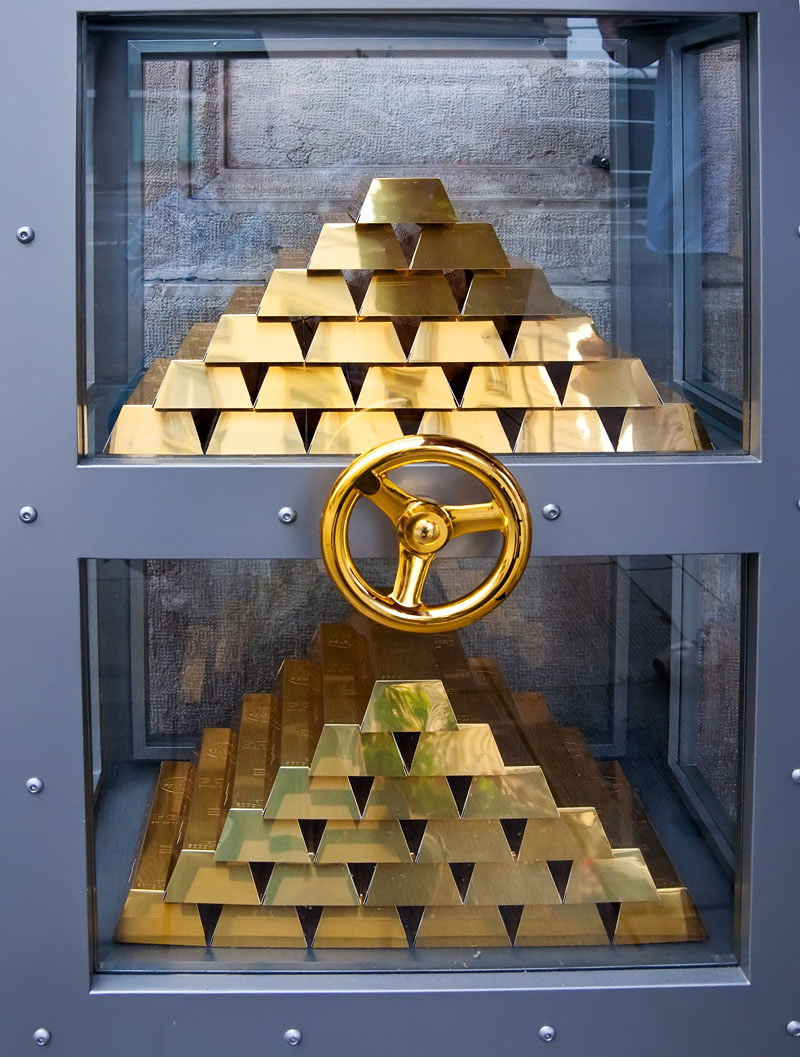
(Kitco News) - President Donald Trump has ordered an audit of the U.S. gold reserves at Fort Knox, raising fresh questions about the country’s gold holdings and the potential for a historic monetary shift. “We hope everything’s fine with Fort Knox, but we’re going to go… to make sure the gold is there,” Trump told reporters aboard Air Force One on Wednesday.
The move comes amid growing speculation over massive gold transfers into the United States and renewed calls for transparency regarding U.S. gold reserves. According to market analyst and author Peter Grandich, the development is not surprising. “I think that's coming. I think that's part of it,” Grandich told Kitco News, adding that an official gold revaluation is inevitable. “It makes sense because it does kick in almost a trillion dollars of paying down some debt by the higher level of our gold holdings.”
Record Gold Transfers into the U.S.
Since November 2024, the U.S. has received over 12.5 million ounces of gold – a record influx that has created tightness in global supply, particularly in London, one of the world’s largest gold hubs. According to Bloomberg, major players, including JPMorgan, are set to deliver over $4 billion worth of gold into COMEX vaults, while China’s banks are reportedly running out of physical gold due to overwhelming demand.
According to Grandich, this surge in physical gold movement could indicate a strategic shift by the U.S. government. “This movement is more, I think, related to the U.S. and what it plans on doing with its gold holdings,” he said. Some analysts suggest that the government could be repatriating leased gold, securing its reserves ahead of a potential revaluation. “Is the U.S. reshoring gold that may have been leased out? Could this be part of a quiet plan to backstop the dollar? Yes, it is,” Grandich said.
“A Near Perfect Storm” for Gold
Gold prices have surged to all-time highs, trading just below $3,000 per ounce as institutional and central bank demand continues to climb. According to Grandich, physical gold now dictates market prices, overriding years of paper market manipulation. “The physical demand and the physical gold market now has finally overridden the paper market once and for all,” he said, pointing to the declining influence of COMEX short positions and increased global gold accumulation.
Meanwhile, the U.S. government still officially values its gold at just $42.22 per ounce, a figure unchanged since 1973. With the total U.S. gold reserves at 261.5 million ounces, a full revaluation at market prices would unlock over $750 billion in financial value, according to analysts. “They're going to remonetize it,” Grandich predicted. “Trump is a smart enough businessman to know—why keep an asset on our books that we’re only carrying at $42 when we can carry it at current prices?”
What Happens if Fort Knox Comes Up Short?
The Fort Knox gold depository, located in Kentucky, holds 147.3 million troy ounces of gold, representing approximately 59% of the U.S. Treasury’s total gold holdings, according to the U.S. Mint. However, the last full audit was conducted in 1974, leading to decades of speculation about whether the gold is still intact.
According to Grandich, if an audit were to reveal a shortfall in reserves, it could trigger seismic consequences. “It would be probably one of the biggest ever, something far worse than the 1929 crash,” he warned. “If the United States, the world's largest supposed holder of gold, still doesn't have it—or doesn’t have anywhere near as much as it claims—it would ruin everything else they’re trying to do.”
Gold’s Role in the New Monetary Order
With global de-dollarization accelerating, central banks—including those in China, Russia, and India—have been aggressively increasing gold reserves, according to the World Gold Council. Some analysts believe that China could be preparing to launch a gold-backed currency, a move that could directly challenge the U.S. dollar’s global dominance.
Grandich believes the U.S. may be positioning itself to counterbalance these efforts. “There’s talk that they might do it, or they may recognize that in some way we have to be tough at the moment, but we'll have to not try to beat them, but join them,” he said. “Maybe there will be a world movement back to a gold-backed currency or some way.”
For now, gold remains at the center of this unfolding financial drama. According to Grandich, investors should be paying close attention. “This is all coming together and being described as a near-perfect storm for gold,” he said. “Most people can't imagine gold going much past $3,000, but they couldn’t imagine the stock market reaching 40,000 either.”
-
 Gold & Silver Stop Dropping And Start Climbing By
September 3 2026
-
 List Of Countries That Have Pulled Gold From U.S. Federal Reserve By
September 3 2026
-

-
 Silver Extends Upswing As Softer Dollar Supports Bulls By
September 3 2026
-
 Gold & Silver Finding Support At Attractive Levels By
September 1 2026